


MEAT AND SEAFOOD TECHNOLOGIESMEAT TECHNOLOGIES
As much for white meat as for red meat, it is just after slaughter that the cold chain starts.
Penetrant testing:
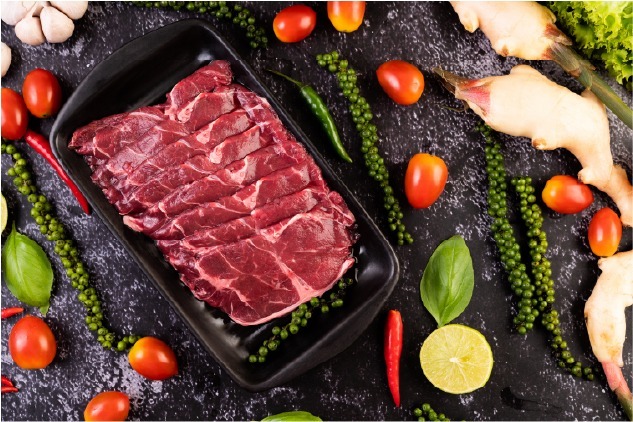
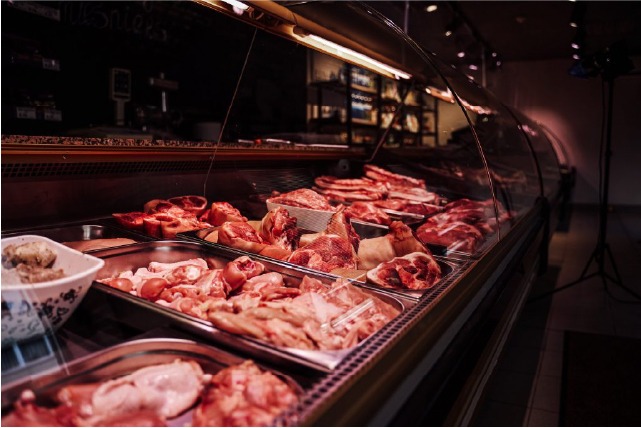
The quality and shelf life of carcasses introduced into a refrigerated environment immediately after slaughter depend greatly on precise adjustments of temperatures, air speed, humidity, and other parameters. These adjustments ensure that target core temperatures are reached on time and help control appearance and weight loss.
Maturation:
Properly regulated refrigeration facilitates meat maturation, leading to a gradual increase in tenderness.
Storage:
Cold storage temperatures and air velocities vary depending on the duration of storage. Factors such as cold room geometry, thermal insulation, and evaporator selection must be carefully considered to ensure uniform air distribution and prevent condensation issues.
Freezing:
High-quality frozen meat should maintain its initial quality without any discernible difference in sensory analysis. The degradation of frozen products over time is influenced by storage conditions, particularly stable and uniform temperatures. Efficient cooling and freezing processes for red meat and poultry are crucial to deliver high-quality, appealing, and flavorful food to consumers.
SEAFOOD TECHNOLOGIES
Storage on flake:
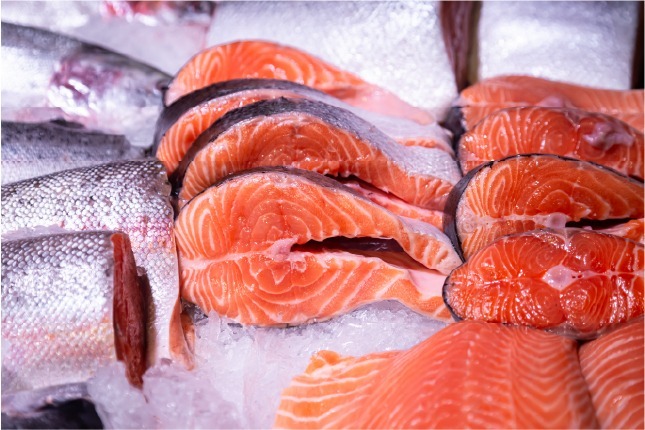
Widely used for the storage of packaged seafood products, this method is also valid for these same unpackaged products, provided that certain precautions are taken in the design of the cold room in order to avoid the risk of oxidation and desiccation.
Flake ice is the most used for the conservation and presentation of seafood products in commercial channels. The correct sizing and choice of a high-performance ice machine as well as the cold production machine that accompanies it can be an important source of savings on energy expenditure.
Storage in static cold room:
Generally small, cold rooms equipped with a static evaporator for fish storage have technical qualities that allow optimal conservation of fish and other seafood products. The evaporators (usually made of stainless steel) which are there diffuse a static cold in order to prevent the delicate flesh of the fish from drying out. The temperature of -2°C to +8°C preserves the flesh and the taste of your crustaceans.
Storage in a ventilated cold room:
Widely used for the storage of packaged seafood products, this method is also valid for these same unpackaged products, provided that certain precautions are taken in the design of the cold room in order to avoid the risk of oxidation and desiccation.
Fast freezing:
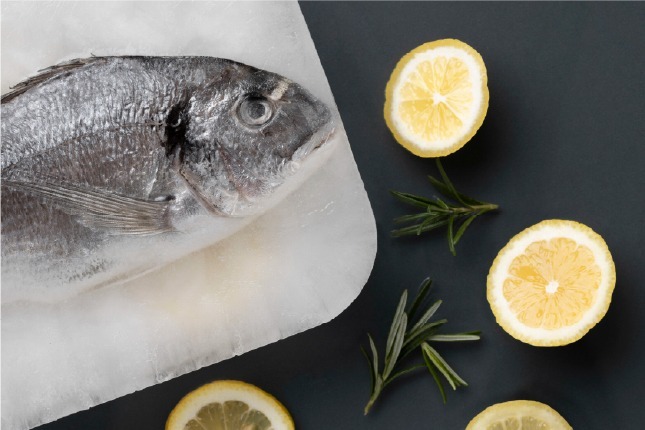
Frozen seafood products are obtained by rapidly lowering the core temperature so as to stop all biological and microbial activity. We offer these temperature reductions with efficient equipment such as freezing tunnels (static or dynamic).
Frozen products are then kept in cold rooms at negative temperatures (from -18°C to -25°C) for periods that can be quite long.